The Eyes Behind the Fence: How a 9-Year-Old’s Secret Changed Everything I Know About Humanity…
There comes a moment in every life when the universe whispers its deepest secret — that we are not separate islands, but threads in a vast tapestry where every pull touches the whole. For me, that whisper came at dawn, in the form of twinkling eyes behind a fence.
I still remember them — children from the servant quarters sneaking through the bushes to watch my Kathak riyaaz. At first, I felt uneasy. I wasn’t allowed to play or talk with them, yet in that vast house, I longed for friendship. Quietly, I began making bonds.
It was then I discovered something that shook me — most of them had never been to school. Children as old as fifteen couldn’t read or write. They moved like shadows, their potential buried under social taboos and neglect. And yet, their eyes… their eyes held galaxies.
What do you do when you realize the very thing that brings you joy could unlock someone else’s prison? That the fence between you and another human is not made of wood and wire, but of fear and tradition?
I chose to see beyond the fence.
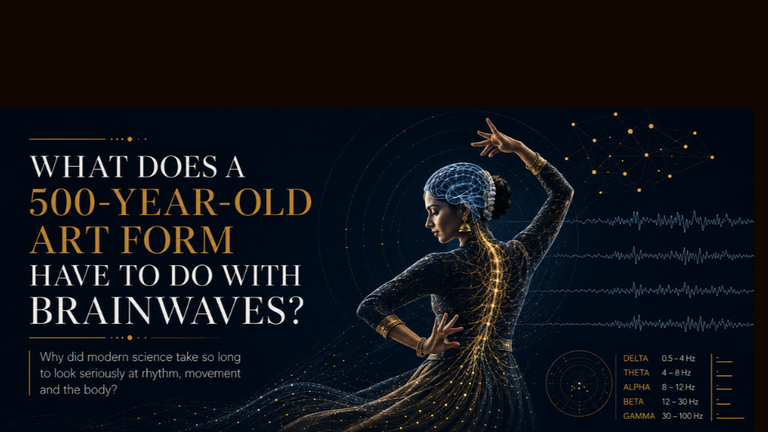
My attempts to teach them reading and writing failed — not because they lacked intelligence, but because they had never learned the concept of learning. So, I offered them something different: the language of rhythm, the vocabulary of movement, the grammar of grace, the mathematics of taal. Kathak became our bridge.
In those secret dawn sessions, they discovered their bodies could tell stories, their spirits could sing, and they too were worthy of beauty and imagination. My tailor-made Kathak lessons became a doorway to curiosity, discipline, and hope. Soon, more children joined — each bringing their untold stories.
But we needed resources. So, I did what any nine-year-old revolutionary would do — I turned my playtime into choreography time, creating performances for school children, earning small fees to sustain our dream. To the world, I was just a child dancing. To myself, I had found something far greater: a vision, a voice, and a purpose.
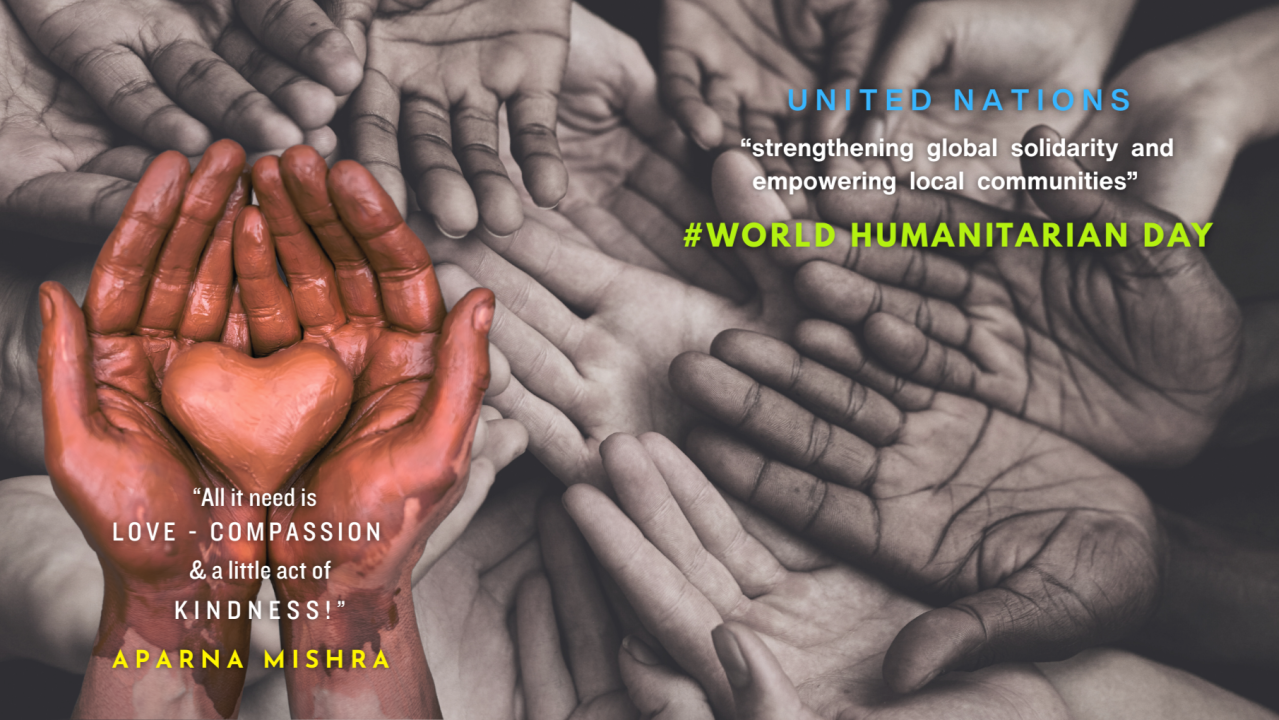
This was my first lesson in what the UN now calls “strengthening global solidarity and empowering local communities.” I was simply a child who knew that when one light shines brighter, it can illuminate many paths.
Years later, when I lost my grandfather and then my father, grief threatened to make everything meaningless. Yet, service became my anchor. What I thought was my gift to others became their gift to me. That is the paradox of humanitarian work: we do not diminish ourselves by giving — we discover ourselves.
With my grandmother’s support and my Guru’s blessing, I founded Kalasaadhna — not as an organization, but as a living organism of service and transformation. Today, it is Kalasaadhna Art & Wellness Centre, and every rupee I earn from it flows back into Shivaakriti Foundation, named after my daughters.
And now, as I look at a world where children in Gaza miss months of school, where families in Sudan face famine, where humanitarian workers risk their lives daily — I still see those same twinkling eyes. They exist not only in refugee camps or disaster zones, but also in our neighborhoods, workplaces, families. In the elderly who feel invisible, in colleagues who struggle in silence, in children dreaming beyond fences of circumstance.
The fences are real, but never permanent. Humanity’s crisis is real, but so is our capacity for compassion, creativity, and courage.
So I ask you — where are the twinkling eyes in your world? Who is waiting for you to notice, to believe, to reach across the divide?
The children behind my fence didn’t need an institution — they needed one person to care. Today, the eyes behind the fences are still twinkling. They are waiting for us to remember that we are all part of the same story.
What act of kindness has changed your perspective on humanity?
Share it below — let’s inspire each other to build bridges where others see only fences.