Aparna
Mishra
She studies the body, mind, emotion, conscience, culture and possibility — and turns those enquiries into performances, practices, conversations, institutions and ideas for modern life. The central question: how intelligently can a human being live?

A mind trained by movement.
A life trained by contradiction.
Aparna’s work has never lived comfortably inside one discipline. Kathak taught her rhythm, structure and emotional grammar. The NCC taught her command and endurance. Corporate life taught her systems, technology and capital. Teaching taught her how differently human beings learn. Motherhood deepened her capacity to read what is not being said. Years of therapeutic and social work taught her that the body often knows before language does.
Today, she brings those worlds together — not as a collage of interests, but as a way of seeing.
She is interested in what makes a human being internally intelligent: the ability to sense, regulate, interpret, relate, choose, create and remain coherent when the world outside becomes increasingly artificial.
Inner Luxury
Luxury, in Aparna’s world, is not excess. It is the quality of your inner life when attention is not fragmented, emotion is not running the system, ambition has not eaten meaning, and success no longer requires self-abandonment.
She calls this Inner Luxury — the cultivated capacity to remain deeply human, internally ordered and fully alive while engaging with a complex modern world.
A worldview with its own architecture.
The work is not a collection of services. It is an evolving body of intellectual property — ideas developed through decades of practice, observation, teaching, performance and human work.
Inner Luxury
The quality of the inner life from which success, relationship, decision and possibility are experienced.
Human Intelligence · Human Core
A contemporary inquiry into the capacities that remain distinctly human as artificial systems grow more capable.
Natya Yoga®
Rhythm, movement, rasa, breath, sound and attention translated from classical discipline into an embodied wellbeing practice.
Conscience Coaching®
A framework for identity, awareness, emotional intelligence and deliberate self-formation.
Quantum Happiness
An exploration of joy through coherence, perception, meaning, embodiment, attention and the architecture of inner life.
Panchatatwa × Navarasa
The five elements and nine emotional frequencies used as lenses for observing the human system.
What she is thinking about now
The most compelling reason to follow Aparna should not be her past. It should be the feeling that something is always forming.
Human Intelligence in the Age of AI
What must humans strengthen as machines become better at memory, prediction, synthesis and execution?
Quantum Happiness
Can joy be understood not merely as mood, but as an architecture shaped by attention, coherence, meaning, embodiment and perception?
Inner Luxury
What becomes genuinely luxurious when convenience, information and artificial intelligence become abundant?
Natya Yoga®
What changes when classical movement is used not only to perform, but to regulate, observe and re-train the self?
The Human Core
How do Indriya, Buddhi, Chitta, Manas, Deha and Prana translate into a contemporary model of distinctly human capacity?
Culture as Future Technology
Can rhythm, rasa, ritual, breath, story and embodied practice become serious tools for modern human development?
Where the thinking continues.
Essays, reflections and live enquiries across Human Intelligence, Inner Luxury, culture, consciousness, ecology and the future of wellbeing.
The Battle for the Human Soul
When machines can imitate thought, what becomes more valuable in the human being — attention, conscience, embodiment, discernment or presence?
Read in the Thoughtbook →Engineering Inner Luxury
What becomes genuinely luxurious when information, speed, convenience and external choice become abundant?
Continue the inquiry →Quantum Happiness
Can happiness be understood not as a mood to chase, but as an architecture that can be observed, cultivated and lived?
Follow Quantum Happiness →The work in motion

Wellbeing Aacharya®
A Human Intelligence and wellbeing ecosystem translating ancient Indian frameworks, contemporary science and daily practice into a modern Inner Luxury OS — evolving from private practice to experience to technology.
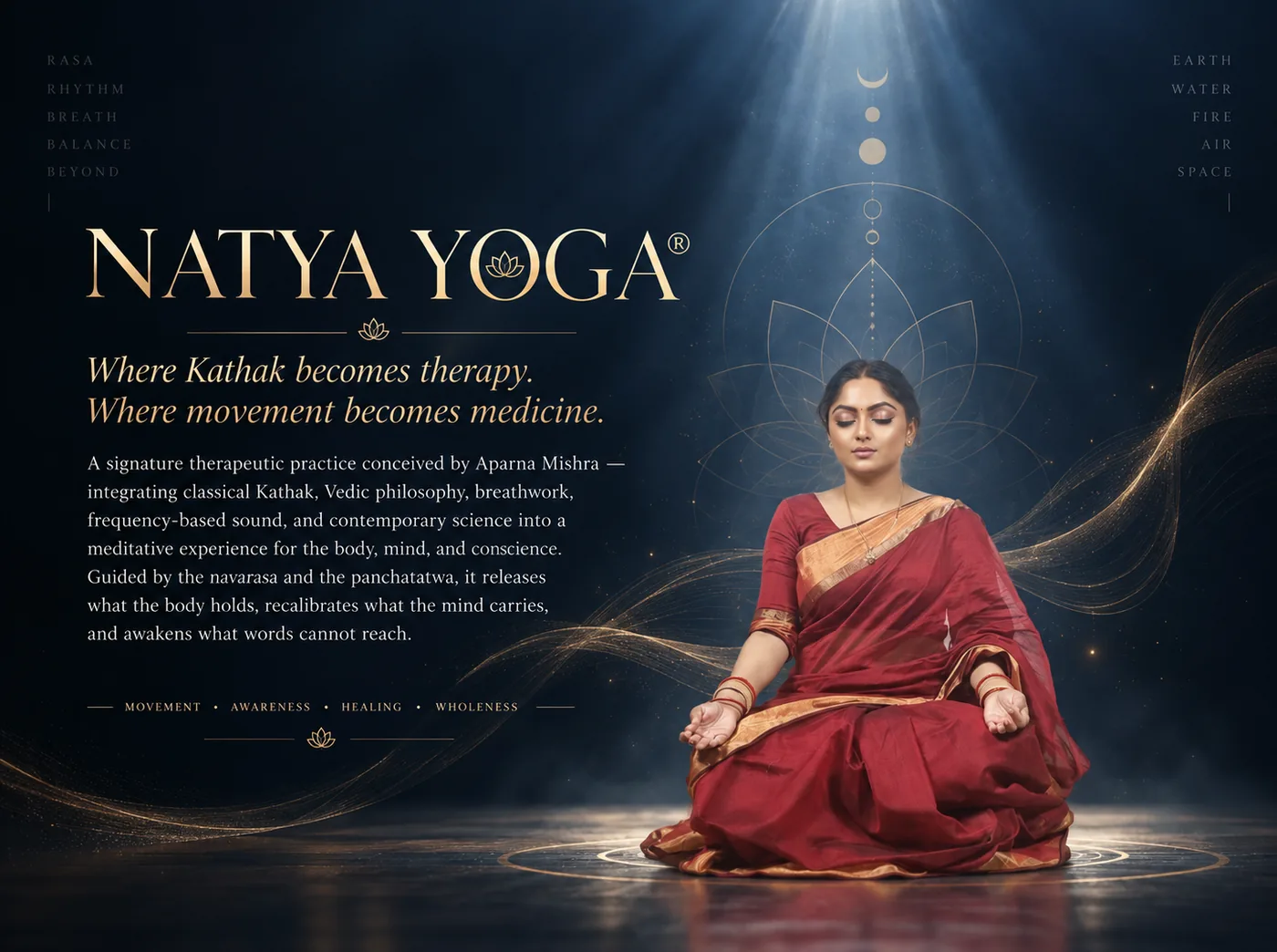
Natya Yoga®
Aparna’s signature movement practice — where classical Kathak becomes a disciplined method for attention, emotional literacy, regulation, rhythm and embodied intelligence.
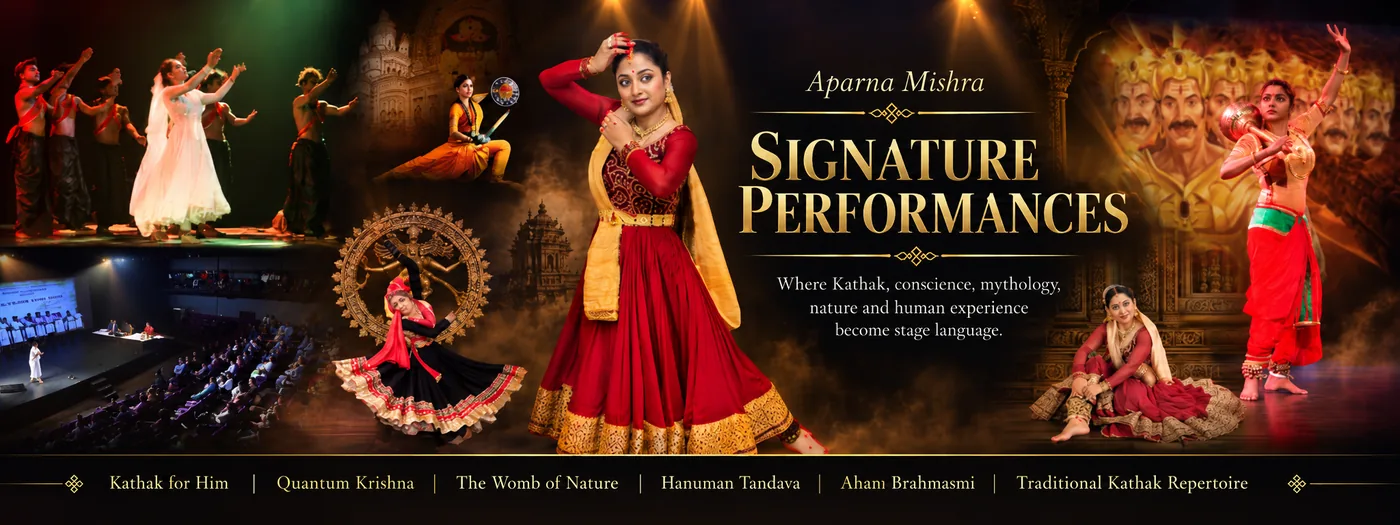
Signature Performances & Keynotes
Live works where movement, philosophy, participation, storytelling and contemporary questions become one experiential language.
What is taking shape now.
Two ideas moving from years of practice and inquiry into new forms — one through technology, the other through writing and conversation.
WBA Experience Platform
Wellbeing Aacharya® · Engineering Inner Luxury
Wellbeing Aacharya® is being translated into a digital daily wellbeing experience — bringing its Human Core philosophy, Inner Luxury architecture, personalised diagnostics and short guided practices into a modern platform designed for everyday life.
Explore Wellbeing Aacharya →Quantum Happiness
Engineering Inner Luxury
A book. A conversation series. One continuing inquiry into the architecture of joy.
The forthcoming book and Inner Luxury Index with Aparna Mishra — Season One: Quantum Happiness extend a long-running inquiry into happiness, human intelligence and the inner life.
Learn more →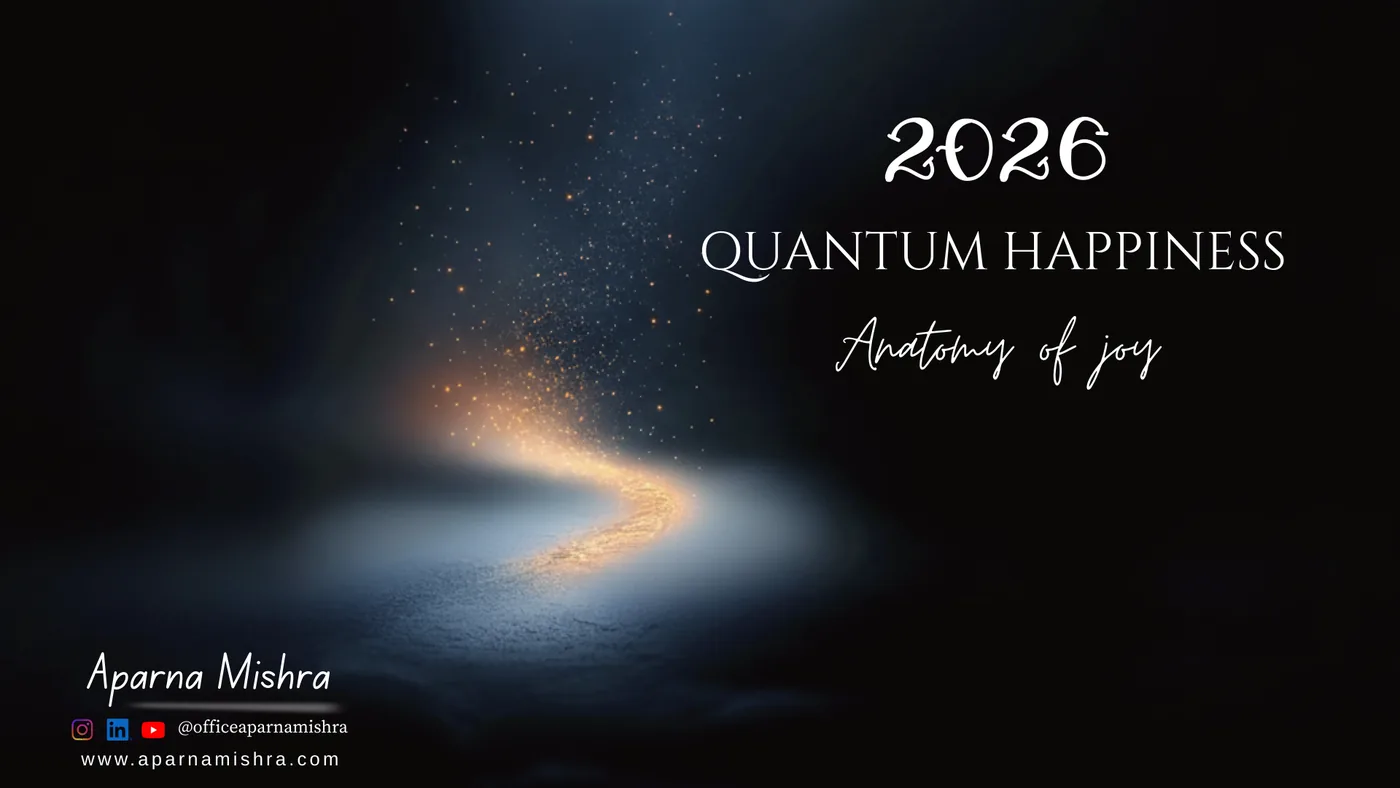
Fifteen editions. One evolving inquiry into life.
Since 2009, Aparna’s annual coffee table calendars have been more than annual objects. Each edition begins with a central idea and becomes a year-long thread across reflection, writing, performance, learning and social work.
Quantum Happiness — The Anatomy of Joy
Twelve thematic enquiries bring together quantum principles, Vedic shlokas, Kathak concepts and lived reflection — exploring joy through multiple lenses rather than reducing it to a passing emotion.
Quantum Happiness · Engineering Inner Luxury
The inquiry now deepens into a book — bringing together philosophy, ancient wisdom, modern science, Kathak, consciousness and experiential practices around the architecture of joy.
Inner Luxury Index with Aparna Mishra
Season One: Quantum Happiness takes the same inquiry into conversations — exploring identity, ambition, pressure, inheritance, responsibility, relationships, conscience and what success feels like from within.
One woman. A body of work.
One philosophy expressed through institutions, intellectual property, experiences, media and enterprise.
Wellbeing Aacharya®
Wellbeing and Human Intelligence architecture for modern life.
Kala Saadhna®
Kathak, pedagogy and the long discipline of becoming.
Aparna Mishra Company (AMC)
The multidisciplinary creative production house behind stage, screen, events, branded content and experiential cultural work.
Shivaakriti® Foundation
Culture, inclusion, environment and humanitarian action.
I AM by Aparna Mishra
A personal expression of Indian aesthetics and identity.
For people whose outer life
is already full.
Aparna’s private work is designed for people who do not need more information. They need better perception.
Founders. CXOs. Family-office principals. Creators. Public figures. Families in transition. People carrying responsibility, complexity, visibility or success — and looking for a more intelligent relationship with themselves.
Through private Aacharya engagements, Natya Yoga®, bespoke salons and carefully designed conversations, she works with the person beneath the role: attention, emotional patterns, body intelligence, relationships, decision fatigue, inner conflict, meaning, rhythm and the architecture of everyday life.
Where thought becomes experience
Experiential Keynotes
Not lectures. Designed rooms where ideas are understood through story, movement, participation and reflection.
Signature Performances
Kathak as philosophical language — consciousness, climate, mythology, masculinity, the self and the future.
Salons & Hosted Gatherings
Small-format, high-trust evenings built around one intelligent question.
Institutional & Brand Collaborations
Concepts, experiences, cultural interventions and creative productions through AMC.
Signature formats including Kathak for HIM™, Pathfinder™, Conscience Coaching® and Project Wellbeing live within this wider practice and are explored on their respective programme pages.
Invite Aparna to make the room think, feel — and participate.
Aparna does not approach a keynote as a speech to be delivered. She designs an experience around the audience, the occasion and the deeper question the room has come carrying.
Storytelling meets guided reflection. Classical Kathak meets contemporary inquiry. Movement, sound, philosophy and participation allow an idea to be understood intellectually — and experienced emotionally and physically.
Art in service of life.
The conscience of the work matters as much as its intelligence. Aparna's humanitarian and ecological practice is not a separate charity chapter — it is where culture, dignity and responsibility become action.
Culture & Inclusion
Through Shivaakriti® Foundation, classical art becomes access — working with underserved communities, children, elders and people with disabilities through culture, skills and participation.
Human Dignity & Possibility
The Foundation's programmes are designed around what a person can become, not the label placed upon them. The work is funded from the profits of Aparna's practice rather than external donations.
Art in Service of the Earth
Womb of Nature, environmental themes, Panchatatwa work and ecological conversations use art to restore relationship — with nature, balance and responsibility.
A life of proof, not performance
The work has travelled through classrooms, boardrooms, stages, institutions, private homes and communities. The proof is not one award or one headline; it is the continuity of the work across very different worlds.
Seen. Discussed. Remembered.
Selected coverage across performance, culture, wellbeing and public thought. Not a wall of logos — a record that the work has repeatedly entered public conversation.
“Aparna doesn't just perform Kathak; she opens a doorway into it. I walked in expecting a performance and left feeling as though I had experienced a part of myself I hadn't met before.”
“What impresses me most is her ability to bridge classical Indian wisdom and contemporary thought without diluting either. The result is both intellectually engaging and deeply moving.”
“Days after her keynote, our team was still discussing the ideas she had shared. It wasn't just inspiring in the moment — it continued to unfold long after the event ended.”
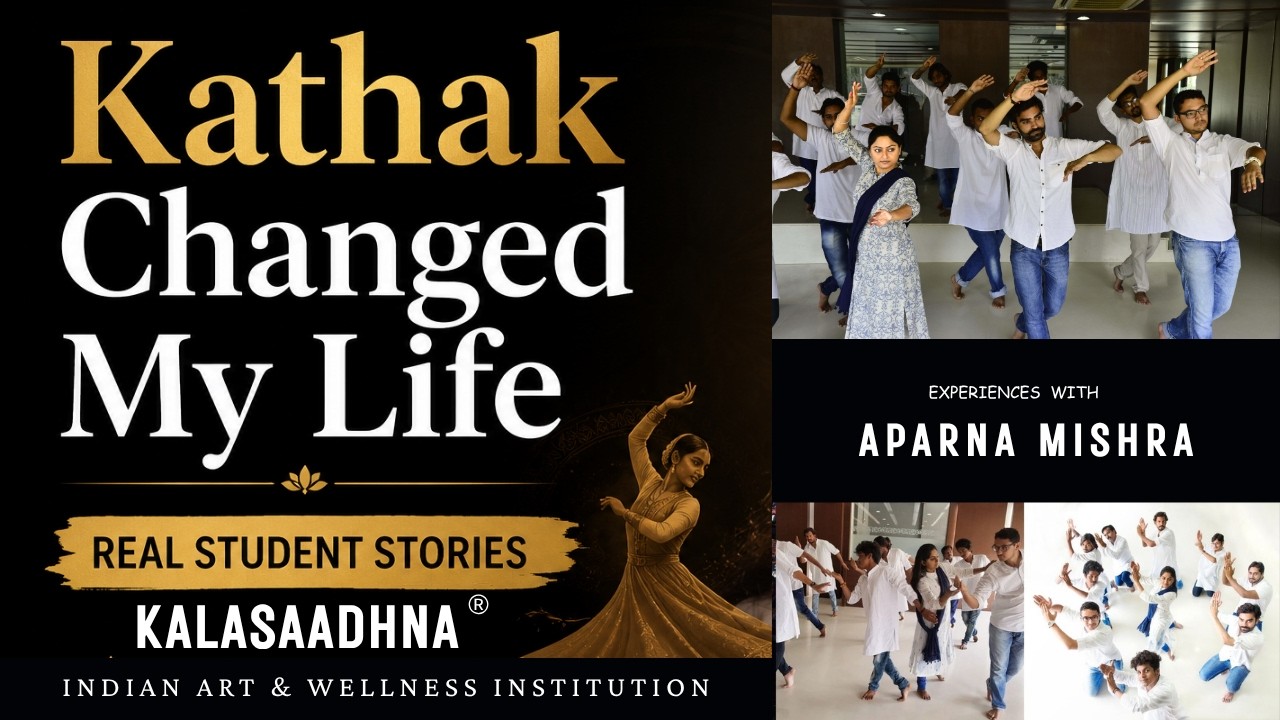
A glimpse of the work, in motion.
Performance. Thought. Culture. Wellbeing. Humanitarian work. A life that refuses to stay inside one category.
Three decades. Distilled.
Aparna Mishra is a Kathak philosopher, signature performing artist, architect of Inner Luxury, wellbeing futurist, eco-artivist, cultural humanitarian and experiential keynote speaker whose three-decade body of work brings together art, ancient wisdom, modern science and Human Intelligence.
She began Kathak at three and teaching at six. What started as movement therapy for her own body evolved into a lifelong study of how rhythm, emotion, attention, discipline, culture and the body shape the human being. Along the way came the NCC, corporate life, systems and finance, motherhood, social work, performance, pedagogy and years of one-to-one wellbeing practice — each adding another lens to the same enquiry.
Today, she is the founder of Wellbeing Aacharya®, Kala Saadhna® and Shivaakriti® Foundation; creator of Natya Yoga®; and the public voice behind a wider body of work spanning Human Intelligence, Quantum Happiness, Inner Luxury Index, cultural humanitarian action, ecological inquiry, experiential keynotes, signature performances, writing and curated private engagements.
Her work is rooted in India, but not trapped in nostalgia. She is interested in what ancient knowledge can teach a technologically accelerated world — and in the distinctly human capacities we will need more, not less, as artificial intelligence becomes more capable.
Mumbai is her base. The work travels wherever the conversation is ready to go deeper.
For the press, the stage, the boardroom and the file.
Approved material for organisers, journalists, institutions, collaborators and partners — so the public record stays as considered as the work itself.
Short & Full Bios
Approved 3-line, 100-word and 300-word biographies for introductions, podcasts, conferences and editorial use.
Access approved bios →Media Kit
Biography, background, showreels, press footprint, signature work and professional information in one place.
Open the media kit →Speaker Profile
Keynote territories, formats, past stages, professional bio and invitation route.
View speaker profile →Performance Dossier
Signature productions, performance formats and artistic territories for festivals, patrons and institutions.
Explore performance work →Press & Event Photographs
Approved high-resolution portraits, keynote photographs and performance images for editorial and event use.
Access official images →Logos & Identity Files
Approved logo assets for legitimate event, media and institutional use.
Access brand assets →Commercial, advertorial or co-branded use of photographs and identity assets should be cleared through the Private Office.
For those who wish to know her closely
A life in ten chapters. Open only as far as you wish to go.
She was born in early 1983 in Patna, into a North Indian family steeped in tradition and ritual. Her grandfather was Chief Engineer in the Irrigation Department; the family lived in a sprawling government bungalow, with the families of household staff living in an outhouse within the same compound. It was a world ordered by rules — many of them unspoken and inherited.
The first thing anyone noticed about Aparna, when she began to walk, was that her left foot turned outward. Visible. Slightly crooked. The kind of thing aunts whispered about over tea in the neighbourhood.
Her grandfather's uncle, Late Pandit Vishwanath Mishra — a renowned Kathak Guru of the Benaras Gharana, whose roots reached back to Mithila and Darbhanga — would visit the house for Sunday brunches. He was old, no longer teaching full-time, but he watched the child carefully.
"Get her trained in Kathak. It will fix more than her feet."
In 1986, at the age of three, he started teaching her the basics of Kathak over Sunday brunches — and introduced her to Krishna, and to abhinaya. Being the only child at home, Aparna found a friend in Krishna — the large idol in the family temple. She would dance for him, whisper to him, compose entire conversations. Krishna was more a sakha — a companion — than a deity.
Soon, at the age of four, her grandmother, Late Smt. Rama Mishra — determined to give her focused training and strengthen her feet — enrolled her in formal Kathak training under Pandit Sant Lal Jha Suman, who would shape the foundation of everything that came after. What began as movement for the body became, almost immediately, something more intimate: a language. A companion. A way of being.
Years later, she would say it differently.
Kathak did not correct my feet. It corrected my entire life.
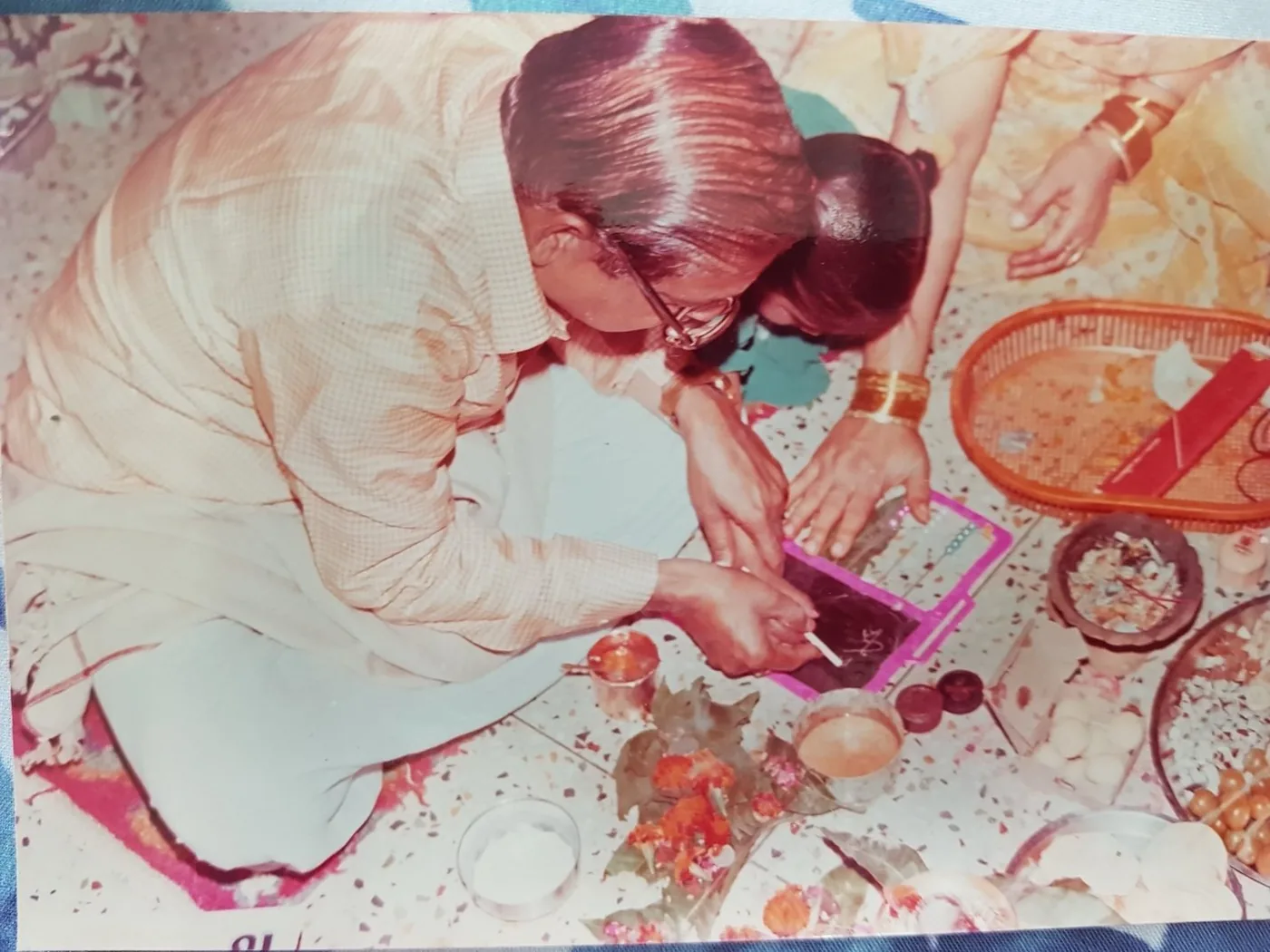
Inside the bungalow, Aparna's world was small and ordered. She was the first child in her generation, with no siblings, not even a friend of similar age, and limited interaction with neighbourhood children. She was a quiet, introverted, shy and silent child — then. Her closest companion was the idol of Lord Krishna in the home temple — blue-hued, watchful, infinitely patient. She danced for him. Whispered to him. Composed entire conversations.
But there was another world inside the same compound — the outhouse, where the children of domestic staff lived. They were not allowed to cross the fence into the garden. She was not allowed to cross into theirs.
She noticed them anyway. They would peek through the fence in the early mornings when she did her riyaaz at 5:30 AM in the first-floor living room — drawn by the sound of her ghungroos, by the spark of something they were never meant to access.
At six, Aparna began to teach them. Quietly, in a blind spot of the backyard where the garden met the outhouse. There was no syllabus. She simply shared what Kathak was giving her — posture, rhythm, expression, attention, and a way to turn feeling into form. She was still a shy, introverted child; teaching became one of the first places where that quietness turned into responsibility.
The first child she taught was a girl called Mamta — round oval face, bright eyes. The first thing she taught her was how to do pranam in the Kathak style. She remembers her face still.
The morning her grandmother stepped into the backyard and found her teaching, Aparna braced for fury. Her grandmother — head of the household, a woman of few words and complete authority — looked at her for a long moment and then said only:
"At least your time is being used in something useful."
The fence quietly opened. The children crossed into the garden. More joined, then more from the neighbourhood. The informal classes began to offer much more than dance: posture, form and technique, but also confidence, alphabets, numbers, and the first building blocks of formal learning.
When the children began to need books, notebooks, ghungroos and recreational supplies, Aparna faced a practical problem. She had no money of her own and was too hesitant to ask at home.
So she found a way. She began teaching children from neighbourhood families for a small fee. Aditi, who wanted to perform at her school annual day, became her first paying student. When Aditi won a performance award, more students followed. Aparna began choreographing school events, teaching Kathak through the Pracheen Kala Kendra curriculum, and preparing students for formal examinations.
She funded the underprivileged ones with what the privileged ones paid.
She was not yet ten. The model was already taking shape: those who could pay helped sustain access for those who could not. It would become one of the recurring principles of the institutions she later built.
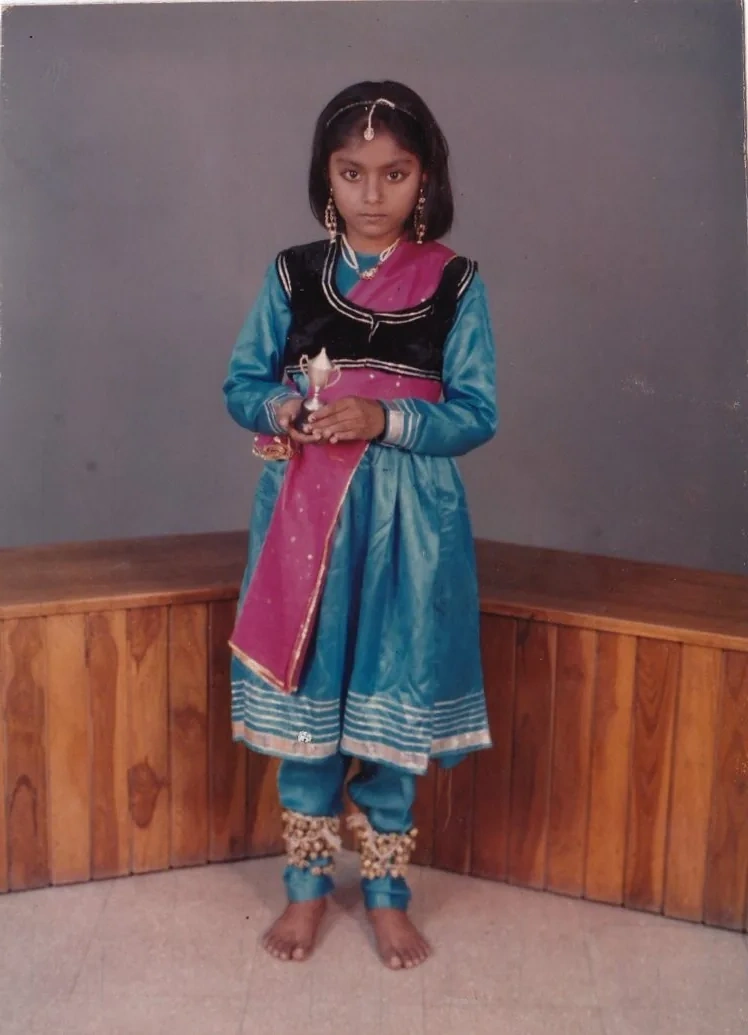
In 1996, her grandfather died of a heart attack. In 1998, her father died of one too.
Aparna was thirteen, then fifteen. The men who had anchored the household were gone in succession. What remained was a family learning a new emotional shape: her grandmother, the source of authority; her mother, a quiet source of support; Aparna herself; and the uncle, aunt and cousin who remained a steady part of her emotional world. Grief changed the household, but she was never without love or anchoring.
A girl meant to be cared for became, instead, the carer. She held them. They held her. The three of them found a strange new shape together.
Kathak, which had first helped hold her body upright, now gave her structure through grief. Riyaaz at 5:30 AM continued. The backyard teaching continued. The neighbourhood classes continued. Rhythm became a way of staying in motion when life itself felt still.
But something was forming inside her that she had not yet named. A thought. A vow. A direction.
By the end of 1998, she knew what it was. She would give the work she had been doing in the backyard a name. She would make it real. She would build it into something the world could see.
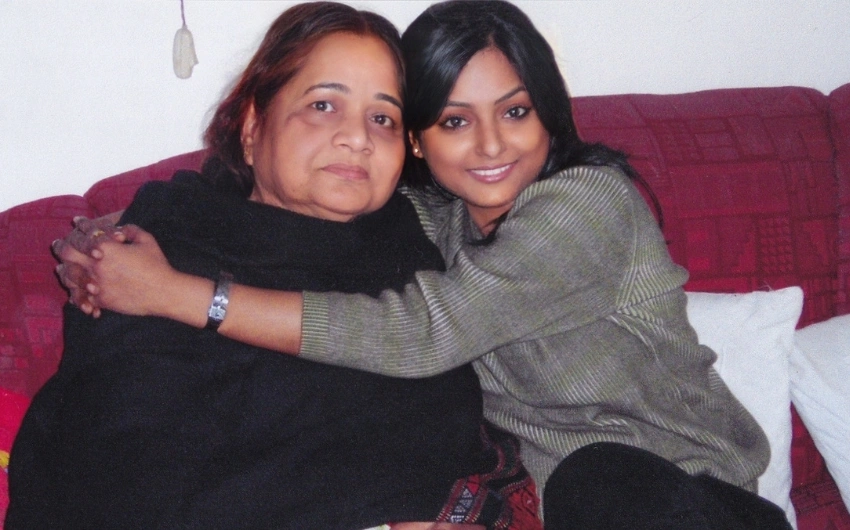
In February 1999, on the day of Vasant Panchami — the day Hindus offer prayer to Saraswati, the goddess of learning — fifteen-year-old Aparna laid the foundation of Kala Saadhna®.
It was a small family ceremony. A Saraswati Puja in the home. Her grandmother. Her mother. Her aunt — who suggested the name Kala Saadhna. And her Guru, Pandit Sant Lal Jha Suman. The blessing of the elders. The lighting of the lamp. The naming of the institution.
The institution she had begun in a backyard at six now had a name, a structure, a vow. A few days later, she was back at the desk, writing answers. The last paper was Hindi, on the 26th of March — her sixteenth birthday. She would carry that detail with her always: I turned sixteen the day I wrote my last board paper.
Then came the holidays. She threw herself into Kathak classes and joined a fine arts course, where she made art pieces that still hang in her Patna home today — early hints of the visual sensibility that would, decades later, find its expression in her annual calendars. Everything was picture-perfect. The institution was born. The world was waiting.
The board results came six weeks later.
Her marks fell short of the top colleges' bar. It would have been easy to attribute this to grief, to the chaos of the past three years, and that was part of it. But there was a deeper truth she would only name many years later:
"I had been studying with the body of a student and the mind of a stranger."
School had never been the place where she learned best. Mathematics and science often felt distant from the way her mind worked; history rarely held her attention. By then, she was already teaching, creating and learning independently. Formal education had not failed her — but it had not yet discovered the method through which she learned best.
English and Hindi were different. She loved both, and remembers the teachers who made the subjects feel alive — especially Sir Ghazali, her English teacher, who taught her not only the language but the carriage of it. Years later, she would credit that fluency with opening doors across very different worlds.
But in May 1999, the doors that mattered most had closed. The top colleges of Patna were out of reach. She was admitted to a C-grade college in Magadh University.
She walked into that college on her first morning, looked around once, and walked out.
She came home. Got into bed. Did not get up for twenty-one days.
There was no diagnosis at the time. The household called it fatigue, a low fever, a heaviness in the chest. Aparna now remembers it as a period of profound emotional withdrawal. She lay on the sofa in the living room, looking toward the window, eating without interest while life outside continued. For three weeks, her own world seemed to stop.
Her grandmother — strict, watchful, loving — let her be. Said nothing. Brought no advice. Only allowed the silence to do its work.
On the twenty-first day, the phone rang in the next room — the more private living room, where serious conversations happened. The black landline of those days.
It was her Guru.
He had filled out a fine arts quota application for Magadh Mahila College, Patna University — months ago, without telling her. She still remembers every frame of that memory. When the phone rang — and it was her Guruji saying: the trial was in two hours. Get dressed. Reach the college. Perform as if you are offering prayer to Saraswati. She will save you.
Aparna would later describe what she felt in that moment as an electric current — the positive shock of hope. She rose from the sofa for the first time in three weeks with energy and spark. She bathed. She put on her Kathak attire — a maroon Anarkali embedded in gold zari, made from her grandmother's favourite saree. Her aunt took her to the college for the trial.
She performed not for the panel, but as an offering — to Saraswati, to her Guru, and to the possibility of a path forward. Her aunt watched from outside the glass trial room and remembers the intensity of that performance.
A week later, the results came. She had been accepted into Magadh Mahila College, Patna University.
"Kathak does not just transform the lives of those I teach. It transforms mine. It is the thing that saves me, again and again."
The First Turning Point
The story that would later define everything began in this same year — soon after Kala Saadhna® had been founded, while Aparna was still a teenager teaching from her family home in Patna.
A woman came to the house through Aparna’s grandmother, asking if Aparna could spend time with her son, who was living with significant psychological and neurological challenges and was under medical care. The mother carried a mixture of exhaustion, trust and hope that Aparna never forgot.
Aparna was sixteen. She had no clinical training and made no claim to it. But she agreed to meet him the next morning before college — simply to observe, engage and see what movement, attention and expression might make possible.
His name was Gillu. He could barely speak. He could not read or write. The first morning, Aparna sat him in the porch, in the morning sun, and simply talked to him. She had no syllabus. No plan.
The next session, she gave him a notebook and crayons. Just draw.
He came back a week later with the notebook full of drawings. A butterfly. A cat. A boy. She enacted the butterfly; they mimicked the cat together. Slowly, he began responding through gesture, sound and movement. Over time, his family noticed changes in his engagement and routine; he returned to school and became more physically active. Aparna used rhythmic tapping, jumping and expressive play as part of the sessions, alongside the medical care already in place.
Months later, his father was transferred to another city. The family lost touch. Aparna never saw Gillu again.
That experience gave Aparna something she would spend years trying to understand: the joy of observing people closely, the confidence to design around the person rather than a fixed syllabus, and the willingness to work without a ready-made manual.
She did not yet have a name for this way of working. She was simply responding to the person in front of her. Years later, she would recognise it as the beginning of her therapeutic approach — the seed of a practice that would continue to evolve for decades.
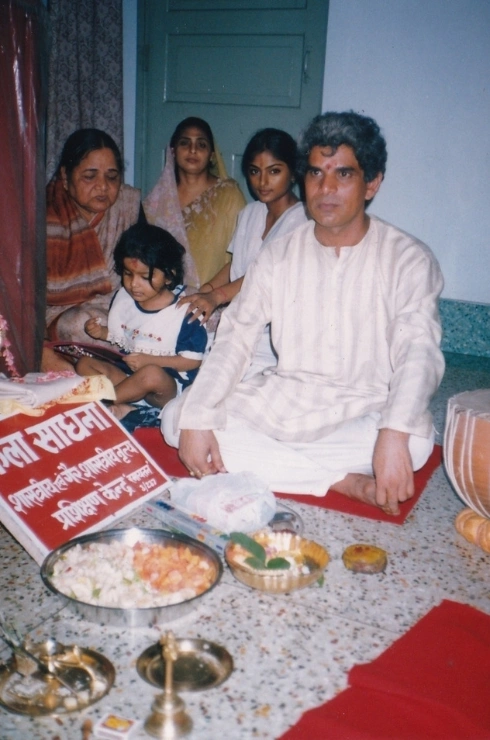
College became the rebirth she had needed.
After two years at Magadh Mahila College through the fine-arts quota, something shifted. The same student who had struggled with conventional school examinations began scoring distinctions. The environment had changed; so had her response to learning. She earned admission to Patna Women’s College for a Bachelor of Business Administration under Principal Sister Dauris, where a demanding academic culture ran alongside the increasingly serious commitments of the National Cadet Corps.
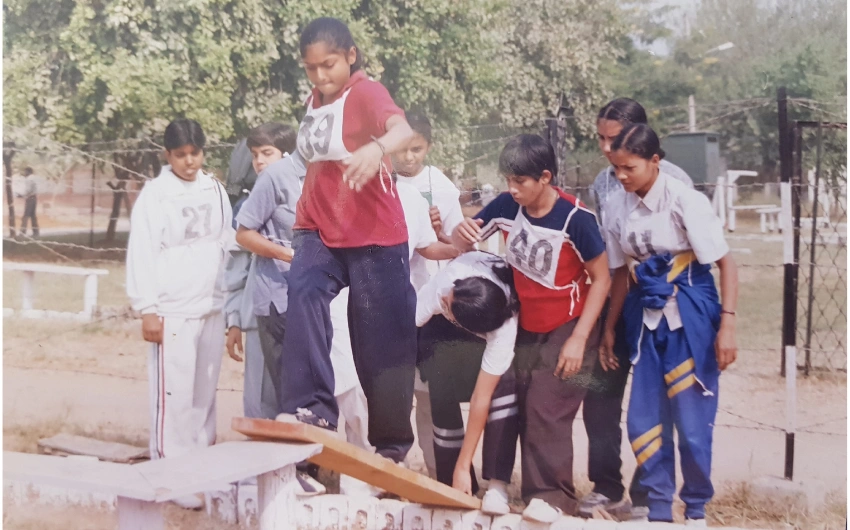
By then, Aparna was representing her college through the National Cadet Corps at state and national levels. Camps, training and travel meant her attendance often fell far below the norm — yet her academic performance and institutional responsibilities kept her progressing.
And yet, every year, she was promoted to the next.
She became an exception to the usual rhythm of college life. Some questioned it; others supported her wholeheartedly. What sustained that exception was the seriousness of the work she was doing outside the classroom — and the teachers who chose to judge her by the whole of her effort, not attendance alone.
Apart from her two loving best friends who always supported her, her biggest support in the college was Professor Joel D'Cruz — a BBA professor who saw her clearly. "I will sit with you in the corridor for an hour, a few days before each exam," he told her. He told the rest of the faculty that Aparna would graduate with a distinction despite her absence. She graduated with 86%.
"A teacher's job is not just to cover the portion. It is to understand how this particular student will learn. The pace. The method. The psychology. The child behind the student."
That principle — taught to her not in a lecture but in a corridor — would later become the foundation of how she herself would teach.
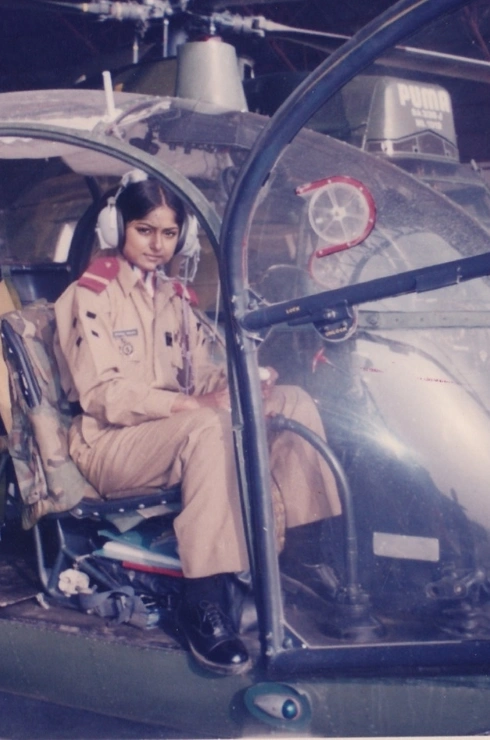
Inside the NCC, Aparna entered a discipline that seemed opposite to dance and turned out to be deeply complementary. Kathak refined grace; the NCC demanded structure. Shooting. Parades. Nursing camps. Navy and Air Force attachments. Cultural competitions. At the 1st Bihar Girls’ Battalion, Ms. Shanta Jha became one of the officers who knew how to draw out Aparna’s best — with rigour, expectation and trust.
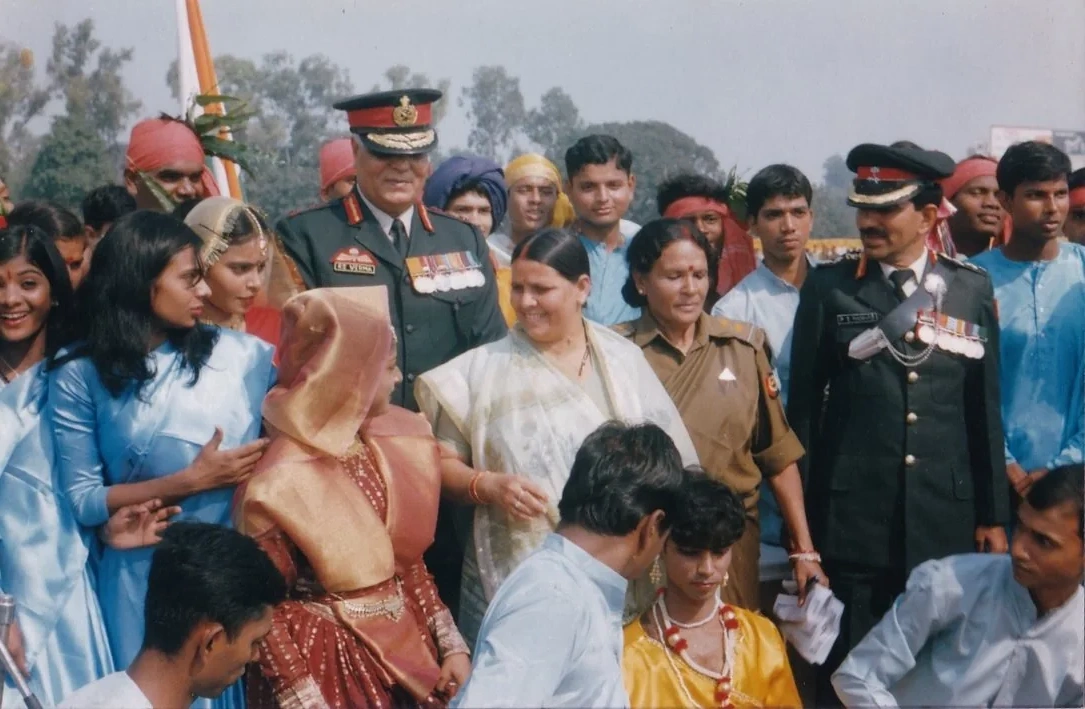
In 2002, she was selected to represent Bihar at the NCC Republic Day Camp in Delhi, one of the Corps’ most prestigious national camps. At the Prime Minister’s Rally on 28 January, she received Best Cadet recognition while representing her state.
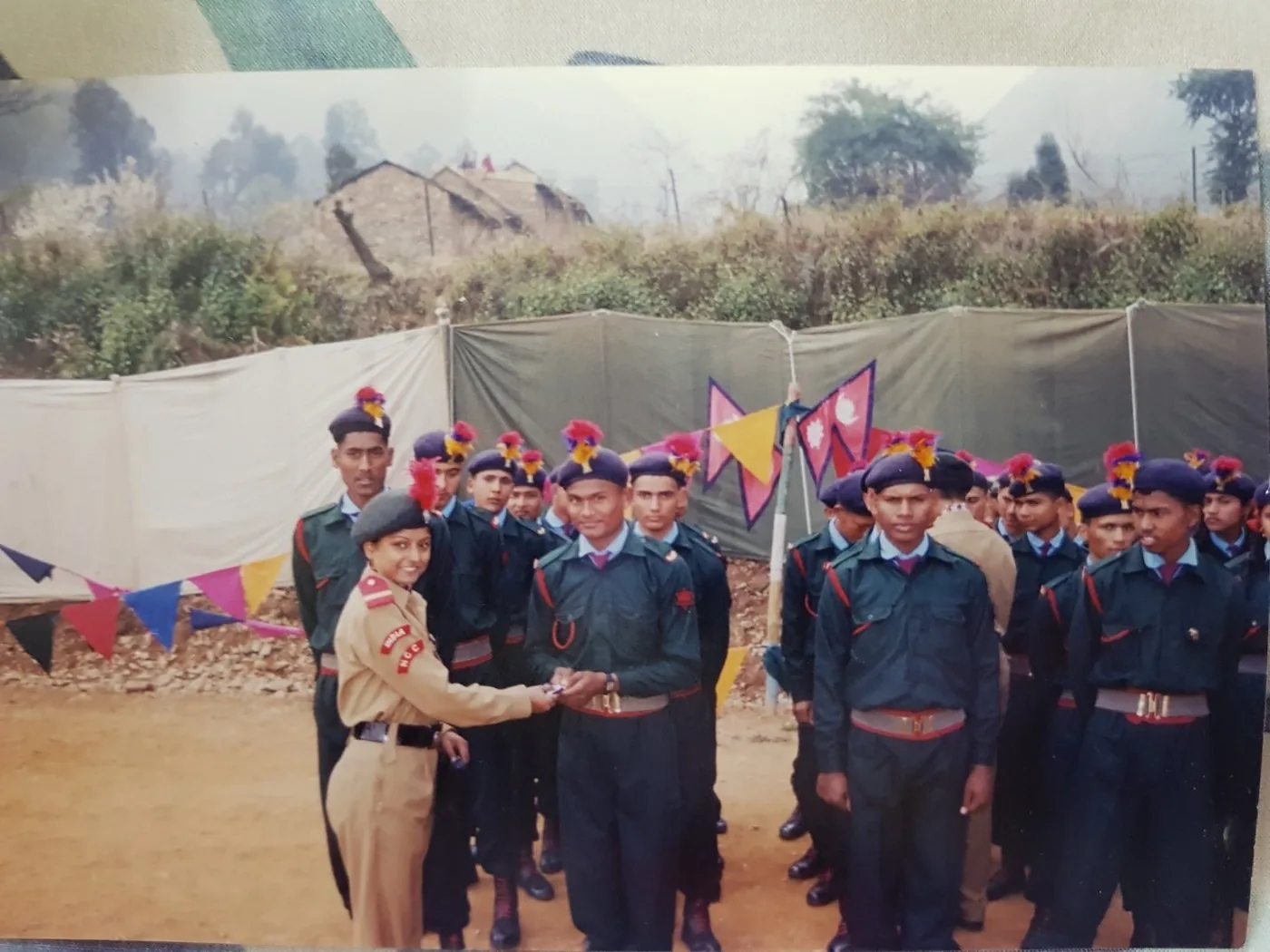
That same year, she was selected for the Youth Exchange Programme and travelled to Nepal as part of an Indian NCC delegation, performing in a formal international setting before delegates from multiple countries.
In her final year, before graduating, she trained the next generation of RDC cadets — preparing them mentally, technically, and emotionally — passing forward what Ms. Shanta Jha had passed to her.
She graduated in 2004 with a BBA from Patna University. She had been transformed by three institutions — Magadh Mahila, Patna Women's, and the NCC — and by the teachers within them whose names she would carry her whole life. Sant Lal Jha Suman, Sir Ghazali, Professor Joel D'Cruz, Ms. Shanta Jha.
Each of them, in their own way, had taught her the same thing: that the right teacher does not deliver knowledge. The right teacher meets the student at the point where they are. It was the principle she would build everything else upon.
Right after her third-year BBA exams, Aparna sat for campus placements — and before her final results were even out, she had moved to Delhi.
Her first job was at Convergys — a BPO that gave her, in her own words, world-class grooming. The shift from a Patna Brahmin household to a Delhi BPO floor was less a job change than a cultural translation. She adapted. She always adapted.
Then came IBM, where she received serious technical training and worked on support for QuickBooks, an Intuit software product. Dell followed, stretching her into systems engineering and a technical world she would never have imagined for herself.
In 2006, the Indian Army interrupted everything.
In 2006, she cleared the Services Selection Board (SSB) at Allahabad for the Short Service Commission pathway — a rigorous officer-selection process involving psychological assessment, group tasks, interviews and medical evaluation. She had earned the opportunity to continue toward officer training. Then she made a different choice.
The seven days at Allahabad clarified something for her. The NCC had already given her discipline, national exposure and a powerful sense of service; the SSB experience forced her to ask what form that service should take. Her answer surprised even her. “The deeper question was simpler: Do I want this now? And the answer, when I let myself hear it, was sharp. No. Not through the Army — but through my craft I can serve the nation better.”
She chose not to proceed with joining. She informed the authorities and returned to Patna. Her grandmother and mother — to her surprise, and to their lasting credit — supported the decision completely.
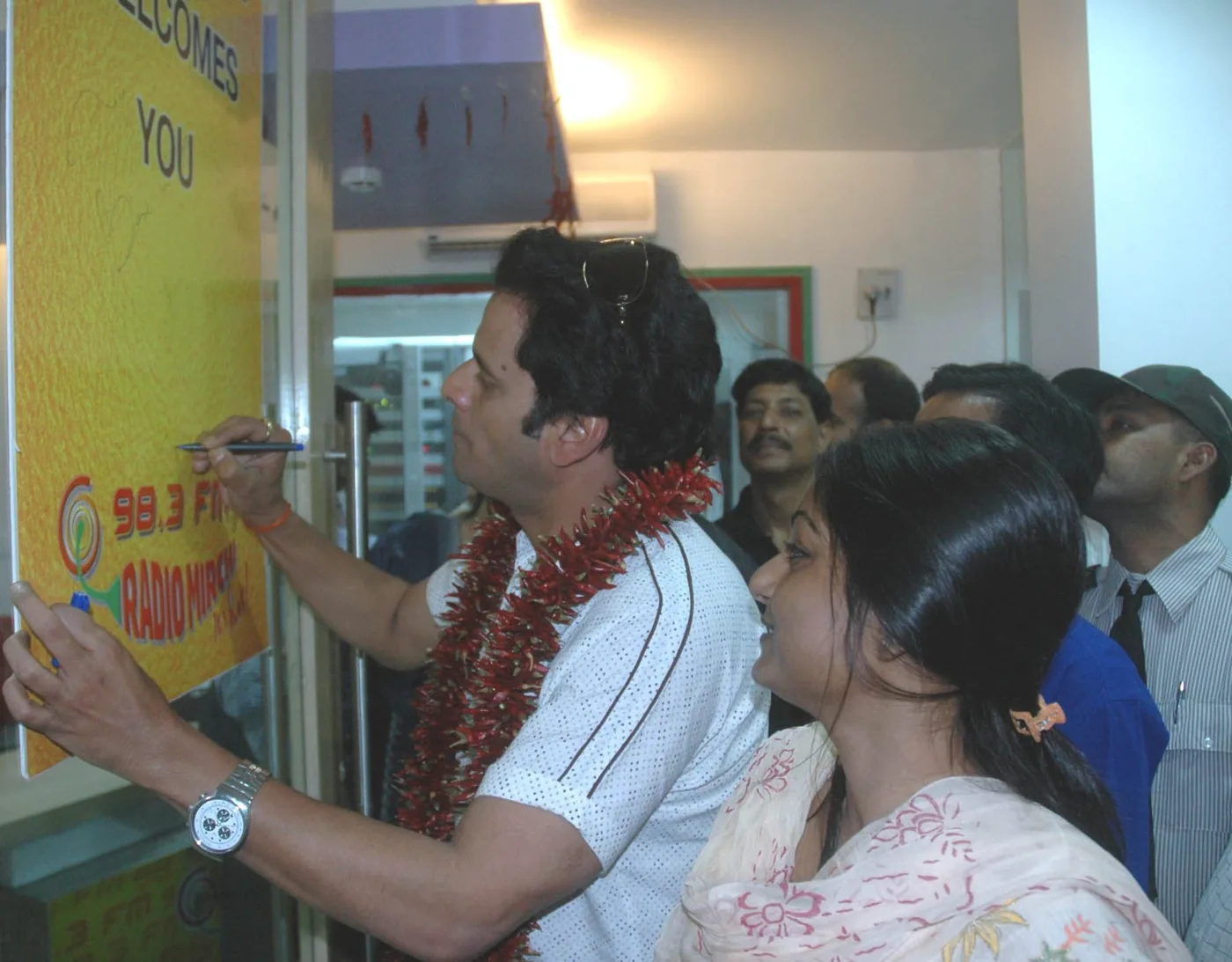
Soon after, she joined Radio Mirchi (Times of India Group) in Patna — a creative environment that suited her instincts in ways the BPO floor never had.
After working for a year in Radio Mirchi, she returned to Delhi, joined an export house for a stretch, and finally landed at her last corporate job before life changed entirely: 3i India Pvt Ltd, the Indian arm of a Singapore-based private equity firm. There she learned finance — the rigour, the language, the discipline of capital. It would prove, in retrospect, to be a strange and beautiful preparation.
Through all these years — Convergys, IBM, Dell, Radio Mirchi, the export house and 3i — another life ran in parallel. Aparna continued her academy from a small studio in South Delhi, teaching Kathak in schools, colleges and at IIT Delhi to a small group of students. Working with engineering minds pushed her own pedagogy toward mathematical patterns, cognition and the science of movement. Her professional life moved across industries; her deepest continuity remained Kathak.
During this period, she sometimes bleached the inner layers of her hair silver-grey and wore glasses to make herself appear older. At twenty-one, she was learning how quickly a young woman’s work could be filtered through appearance. The improvised disguise became a small shield: a way to redirect attention from how she looked to what she was building. Looking back, she remembers the seriousness with which she executed the strategy — and laughs.
Across those years, she learned the art of adaptation: how to move between roles, cultures and disciplines without losing the thread of herself. She did not yet know how useful that ability would become.
She would understand some of it after moving into the next chapter of her life.
She had met families through conventional arrangements and matrimonials, but rarely felt seen beyond the persona people encountered first. She wanted something simpler and harder to find: to be met as a person, not admired as an image.
Then she met Satish — a serious, intellectually exacting finance professional who valued knowledge, depth and action more than display. Their temperaments were very different, but their appetite for ideas created common ground. He was the first man in that process with whom she felt she could have an equal conversation — not perform a version of herself.
Eventually she told him about the bleached hair and the fake glasses — the years in which she had tried to make appearance irrelevant. He understood the instinct behind it. The relationship grew around conversation, respect and the freedom to remain intellectually curious.
The years she had spent reinventing herself across BPOs, banks, and IT firms now made sense in retrospect. Satish was a high-bar introvert. He had no patience for surface.
"Had I not been that experimental with life, we wouldn't have been compatible. My journey so far had been training me for him."
They married in April 2009. She moved to Mumbai.
She brought Kala Saadhna® with her, evolving it into Kala Saadhna® — Indian Art & Wellbeing Centre. The first teaching room in Mumbai was her own living room. Her earliest students came from the housing society; many are now professionals living across the world, and several remain in touch. In a small symmetry she still enjoys, her first student in Mumbai was also named Aditi.
Mumbai felt, almost immediately, like home. Its cultural multiplicity, its pace, and the way it made space for people from every walk of life gave her work a new field in which to grow.
Newly married. New city. New life.
Her evenings were full — students arriving in her living room, the rhythm of ghungroos on a Mumbai floor — followed by late evenings with her husband. But her days had a strange emptiness. She had moved from a self that worked across two cities, three vocations, and several institutions — to a self with afternoons to fill.
In October 2009, she began something to fill them.
She designed a calendar — with the theme of Kathak. Twelve months, twelve Kathak postures, each captured with a certain mudra and accompanied by a deeper reflection on wellness — how small things, practised daily, can make profound changes over the long arc of a life.
The first edition was titled New Beginnings — twelve months, twelve themes, an artistic and contemplative offering. She printed a small batch and gifted copies to people around her: her students, the corporate connections she had built across her years in Delhi, the people who had shaped her. There was no commercial intent. There was only a need to make something — to do something with Kathak, for Kathak, for people. Her subconscious was intuitively guiding her toward something she could not yet name.
"It kept me in conversation with myself across the empty afternoons. It reminded me, every January, that the year ahead was mine to shape."
It became, year by year, a vision compass. Each January, a new theme. Each year, a deeper exploration. Each calendar a thread that connected her year-long arc of performances, salons, foundation projects, and contemplative practice. The theme would not end with the printed page — it would become the creative and intellectual thread guiding her work through performances, productions, keynote conversations, therapeutic trainings, educational initiatives, and social projects.
Over the years, the calendars travelled far beyond the circle in which they began. Editions were received by the Vice President of India, Union Ministers, State Governors, Members of Parliament, industrialists, bureaucrats and educational institutions — turning a private annual ritual into a recognised signature of her work.
In 2010, she founded Wellbeing Aacharya® — a holistic wellbeing practice centred on deeply personalised one-to-one work through the Aacharya Holistic Program. The instinctive way of observing, adapting and working with the individual had begun much earlier; now it was becoming a deliberate methodology.
In 2012, Aparna gave birth to her elder daughter, Shivanshi. She gave herself fully to motherhood for the first year, teaching only from home. Motherhood altered her relationship with time, patience, the body and empathy — a kind of personal rebirth that would quietly influence the work that followed.
In 2015, Kritika arrived and completed the family.
That same year, she did two things that would shape the next decade.
First, she incorporated Shivaakriti® Creations Pvt Ltd — a private limited company designed as a multi-vertical holding for everything she would build.
Second — and this is the moment that holds her most dear — on the day she officially named her younger daughter Kritika, she also gave a name to the cultural and humanitarian work she had been doing for years: Shivaakriti® Foundation.
The name carries two meanings, both true. In Sanskrit, Shivaakriti means in the form of the auspicious — the shape of Shiva himself. In the family, it carries her daughters' names: Shivanshi and Kritika, woven together. The foundation is the auspicious shape that her daughters made possible.
The Foundation brought several strands of her work under one purpose: Indian art and culture, inclusion, environmental awareness, emotional wellbeing, youth development, and access for underserved communities and people with disabilities. Its projects carried Sanskrit names reflecting their intent: Susanskrit, Kshamta, Sa-Shakt, Kaushal and Shashakt.
Aparna continued to design the projects personally, and income from her professional practice helped support the Foundation’s work. The model echoed the one she had stumbled into as a child: those with access helping make access possible for others.
She was, by any measure, building an institution.
She did not know that yet. She thought she was just teaching Kathak.
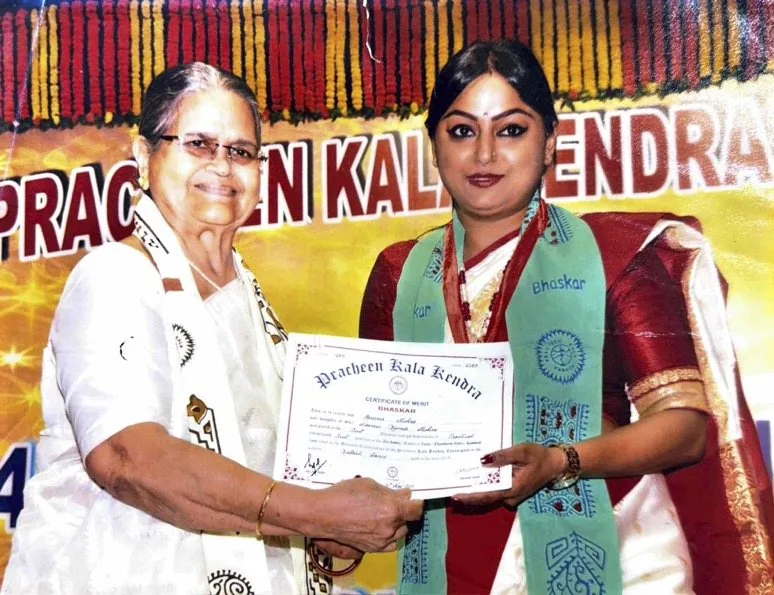
To fulfil a wish of her grandmother, Aparna continued her formal Kathak studies alongside family and professional life. She later completed Nritya Bhaskar at Pracheen Kala Kendra and received the All India Gold Medal for outstanding theory and practical performance. Of all the awards and medals she had brought home over the years, this was the one she most wanted her grandmother to hold.
MASTER’S IN KATHAK (M.Ed.) — GOLD MEDALIST, PRACHEEN KALA KENDRA CONVOCATION.
Somewhere across these years, the work Aparna was doing began to outgrow its old name.
By this period, the work had moved beyond conventional dance training. Aparna was designing movement-led wellbeing programmes around emotional regulation, neurological and developmental challenges, environmental anxiety, performance pressure, ageing and inner awareness. The approach drew from Kathak, yoga, meditation, breathwork, Panchatatwa, Vedic philosophy, contemporary science, mathematical patterning and the study of emotion.
During this period, her advanced Kathak training culminated in Nritya Bhaskar at Pracheen Kala Kendra, where she received the All India Gold Medal for theory and practical performance.
Her production work also evolved into what is now AMC — Aparna Mishra Company, the creative house behind her stage, screen and experiential work. Across selected productions, she also created opportunities for artists emerging through Foundation initiatives, allowing training, performance and livelihood to meet on the same stage.
The signature productions deepened in this period: Womb of Nature — a meditation on climate, womanhood and the earth; Hanuman Tandava — mythological power examined through social justice and conscience; Quantum Krishna — Vedic philosophy viewed through the lens of quantum thought; Devi Navrasa — the emotional frequencies of the feminine; Aham Brahmasmi — self, consciousness and the unified field; and Panchatatwa — the five elements as both philosophy and embodied practice.
Recognition followed alongside the work: media features, institutional honours and awards including recognition from Digital Arabia and Zee London (2016), IIT Bombay (2017), and the Navbharat Times Award presented by the Chief Minister of Maharashtra (2017). Aparna’s stated position has remained consistent: she does not pay for awards or recognitions.
There was no breakthrough moment. There never had been.
“I never began with a title. I began with observation, movement and a different perspective. Over time, I realised that Kathak could become more than performance — it could become a structured wellbeing practice. That changed the direction of my work.”
Wellbeing Aacharya® became the larger home for that work — a personalised wellbeing practice drawing from Kathak, Vedic philosophy, breathwork, Panchatatwa, frequency-based sound and contemporary science, brought together through the Aacharya Holistic Program.
At its heart sat Natya Yoga® — her signature therapeutic movement practice, formally trademarked in 2019. Natya Yoga® was never intended to stand alone; it became one modality within a wider, person-centred approach that also drew on sound and brainwave practices, Jal Therapy, breathwork and nutritional redesign. The through-line remained the same: understand the person first, then design the experience.
The seed planted in her teenage years had grown into an architecture of wellbeing — still evolving, still experimental, and increasingly clear in its philosophy.
Aparna stands today at a moment of consolidation — not the end of anything, but the gathering of three decades of work into structures that will outlive her.
Through Kala Saadhna®, she continues to teach — but the teaching has evolved. The aim is no longer only to train performers; it is to use Kathak as a framework for discipline, expression, grooming, emotional intelligence, life skills and inner refinement, across people and age groups.
Through Wellbeing Aacharya®, she develops personalised wellbeing experiences through Natya Yoga®, Conscience Coaching®, Panchatatwa work, lifestyle design, curated salons, experiential workshops and Project Wellbeing. The work moves between private one-to-one practice, small groups, schools, institutions and organisations — adapting the format to the people and the context.
Through Shivaakriti® Foundation, she continues to design programmes around culture, inclusion, youth, people with disabilities, underserved communities and environmental consciousness. The Foundation remains closely linked to the larger body of work, with professional income continuing to support selected initiatives.
Through Shivaakriti® Creations Pvt. Ltd., her creative and wellbeing ventures are being consolidated into a clearer ecosystem — including Wellbeing Aacharya®, Kala Saadhna®, I AM by Aparna Mishra, and AMC, the creative production house behind her performances, films, keynotes and experiential formats.
Her current work is also moving into publishing and conversation. She is completing Quantum Happiness — Engineering the Inner Luxury of Being, and developing Inner Luxury Index — the Aparna Mishra Show, whose first season explores Quantum Happiness through conversations with the next generation of leaders. Her 2026 collector’s calendar, Quantum Happiness — The Anatomy of Joy, continues the annual publishing ritual she began in 2009.
Her two daughters, Shivanshi and Kritika, are growing into their own selves — and are, in a sense, the deepest work of her life.
But the chapter she is writing now is not about what she has built. It is about what she is becoming.
The Wellbeing Aacharya® digital platform — with its first phase planned for 2027 — is the next extension of that vision: translating a highly personalised practice into a daily wellbeing experience that can reach far beyond the room in which it began.
The ambition is not to turn wellbeing into another luxury product. It is to make the inner capacity to live well feel accessible, practical and worth practising every day.
Modern life has intensified stress, burnout, distraction and disconnection. Aparna’s question is not how to add another intervention on top of that life, but how to help people understand the human system underneath it — body, breath, emotion, attention, behaviour, environment and conscience.
What she is building draws from Indian knowledge systems — Panchatatwa, Navarasa, classical movement, breath and sound — while using contemporary science and digital technology as tools of translation. The aim is not to prescribe from a distance, but to understand context and recommend practices that can be lived in minutes, every day.
This is where her idea of Inner Luxury becomes most concrete: wellbeing not as display, escape or reward, but as the quality of one’s inner life. A person who is more aware, emotionally literate, connected to nature, grounded in conscience and able to return to alignment.
She calls herself a wellbeing futurist not because she claims to predict the future, but because she is interested in designing for it. A future in which wellbeing is not the reward at the end of success, but part of the operating system beneath it; where technology does not replace human intelligence, but helps people understand and use it better.
That is what she is building now: not one brand, one company or one methodology, but a connected body of work around a single idea — Inner Luxury.
A life that works better from the inside out.
It is, in the end, what she has spent her entire life learning how to give.
✦ ❀ ⚘ ◈ ✧
Mumbai is her base; the work continues to travel. Across performance, wellbeing, education, culture and technology, the question remains the same: how can a human being live with greater awareness, alignment and meaning?
What comes next is the point.
Aparna is not interested in becoming a museum of her own achievements. The next phase is about building intellectual property, experiences and institutions that can travel beyond her physical presence.
Quantum Happiness becomes a book, a conversation format and a body of public thought. Inner Luxury Index becomes a platform for intelligent intergenerational dialogue. Wellbeing Aacharya® evolves into a Human Intelligence ecosystem that can translate deep frameworks into daily practice at scale. Natya Yoga® continues as the embodied core. AMC gives the ideas cinematic and experiential form. The Foundation keeps the work answerable to humanity beyond privilege.
The ambition is not merely wellness. It is human possibility — developing a stronger human core in a world where machines will increasingly perform many of the tasks we once used to define intelligence.
Enter the conversation.
For private engagements, keynotes, performances, collaborations, media, institutional work, strategic partnerships or curated gatherings, Team Aparna Mishra will route the enquiry to the appropriate next step.