Re-Set Your Emotional Compass
We all grew up with bedtime stories, but have you ever thought about how deeply they shape us? These simple tales lay the foundation for how we navigate emotions and life. It’s only later, when real-life situations mirror those stories, that we truly grasp their lasting impact.
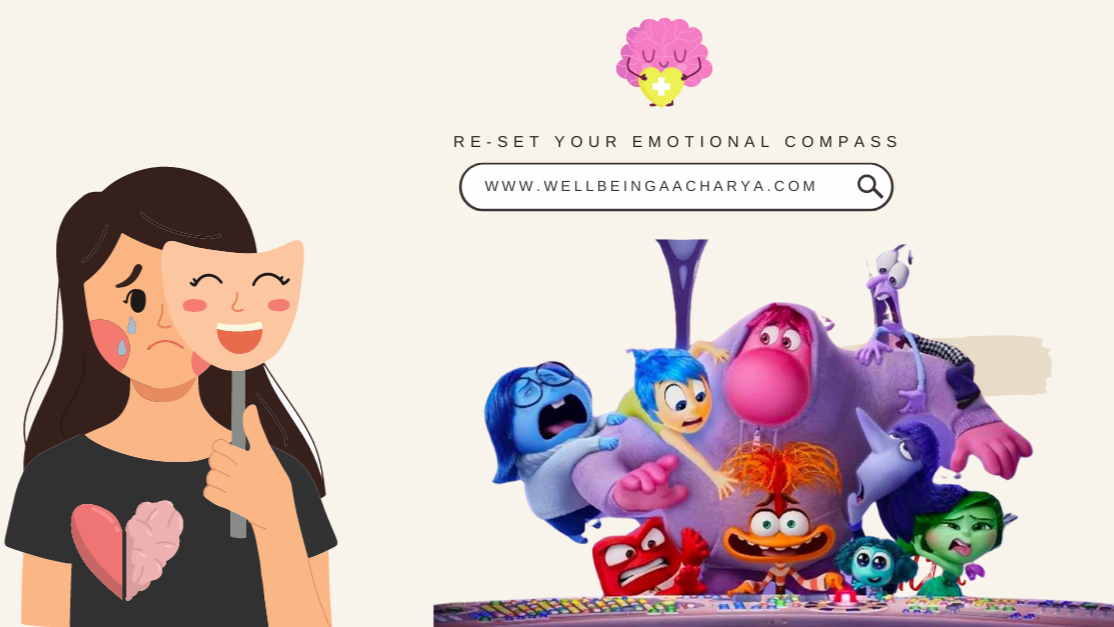
We often think children’s stories are just for kids, but have you ever revisited one as an adult and found it speaking to you in ways you never imagined? That’s exactly what happened during a recent family movie night with my husband, kids, and mom while watching Inside Out. Each of us, from different generations, found ourselves deeply connecting with the emotions and characters. Let me introduce you to the movie characters:
Joy: Radiant, upbeat, and always looking on the bright side, Joy is the natural leader in the young girl’s mind, setting the tone for the other emotions to follow.
Sadness: Initially appearing as a gloomy blue figure, Sadness feels like a burden, wrapped in negativity but carrying a deeper purpose.
Disgust: Vibrant green with a sharp sense of style, Disgust is quick to reject anything unfamiliar or unpleasant.
Fear: Lanky and nervous, Fear wears oversized glasses and constantly anticipates danger, retreating from any potential threat.
Anger: Short, fiery red, and always ready to explode, Anger erupts at the slightest irritation, often creating chaos.
During the movie, at first, we all related to Joy—the one keeping everything in check, striving to maintain positivity. But as the movie progressed, we realized how vital each emotion truly is. They aren’t isolated forces; they work together, much like the emotions in our own lives. Sadness, though frustrating at first, emerged as the root of empathy and connection, while Anger, often feared for its destructive power, can be the catalyst for rapid, productive change.
This emotional complexity isn’t unique to the movie. We humans are naturally wired with nine core emotions, known as Navrasa: Shringara (love/beauty), Hasya (laughter), Karuna (sorrow), Raudra (anger), Veera (heroism/courage), Bhayanaka (fear/terror), Bibhatsa (disgust), Adbutha (wonder/surprise), and Shantha (peace/tranquility). Each of these emotions plays a critical role in shaping our behavior, perception, and reactions.
Our emotions aren’t meant to be judged or labeled as “good” or “bad”—they are signals. When we ignore or suppress them, they grow stronger and create imbalance. When we acknowledge them, they teach us valuable lessons. Emotions like fear, disgust & anger, though often seen as negative, are essential for building connections with others and driving change.
As adults, we’ve been conditioned to hide or suppress uncomfortable emotions, but this habit can have significant consequences—not just mentally, but physically. As a wellness coach, I’ve witnessed how unresolved emotional conflicts contribute to a range of health issues, from high blood pressure and hypothyroidism to type 2 diabetes, chronic pain, and heart disease. Emotional stress, when left unaddressed, manifests in the body, silently affecting our well-being over time.
Inside Out offers a powerful reminder: while external events may trigger our emotions, it’s what’s happening inside that truly matters. When we are overwhelmed with a constant stream of emotions and thoughts, understand, it’s time to pause and reflect on what’s happening within and clear out the backlog of emotions we’ve avoided or ignored.
By embracing practices like therapy, journaling, socializing, and mindfulness, we reconnect with our emotions—both those we experience in the present and those buried in our subconscious from the past. This emotional awareness is essential for healing and empowers us to take control of our well-being, allowing us to live healthier, more fulfilling lives.
Are you still worried and concerned about what others think (“log kya kahenge”) & being judged for your emotions?
Remember, emotional mastery isn’t about avoiding feelings—it’s about using them to fuel our growth and resilience!
Live happy, live yours.
Love,
Aparna Mishra