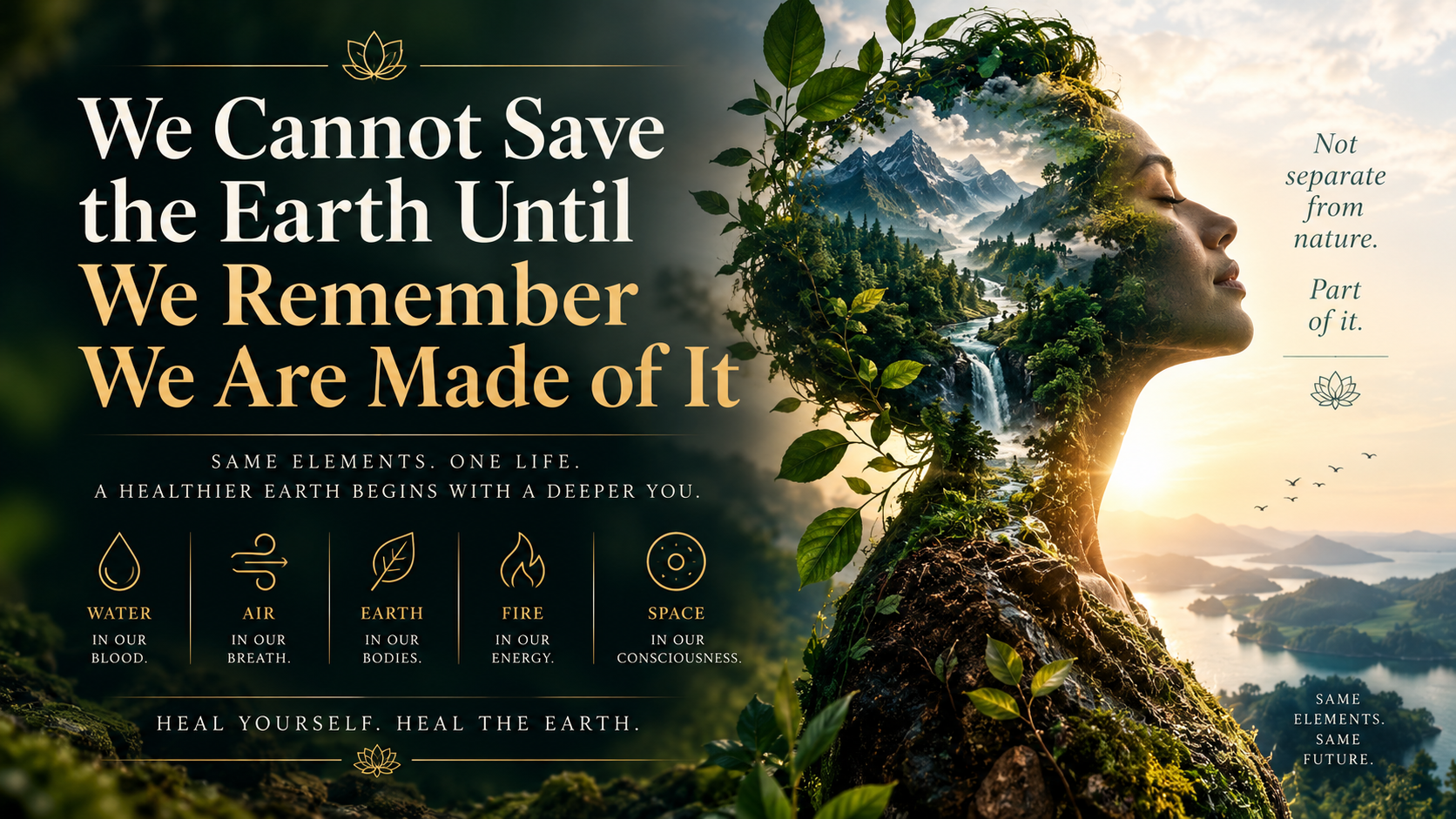
We Cannot Save the Earth Until We Remember We Are Made of It
Eco-anxiety is real. But the response it demands is not activism. It is re-membering.
I have been called an eco-artivist. I accept that word. But I want to be precise about what it means — because the activism I practice is not the kind that begins with a protest and ends with a hashtag.
The activism I practice begins inside the body. It begins with the moment of truly feeling the earth under your feet, the air in your lungs, the water in your blood. It begins with the visceral, cellular recognition that you are not standing on the earth. You are the earth, temporarily organized into the form of a human being, temporarily able to know itself through your consciousness.
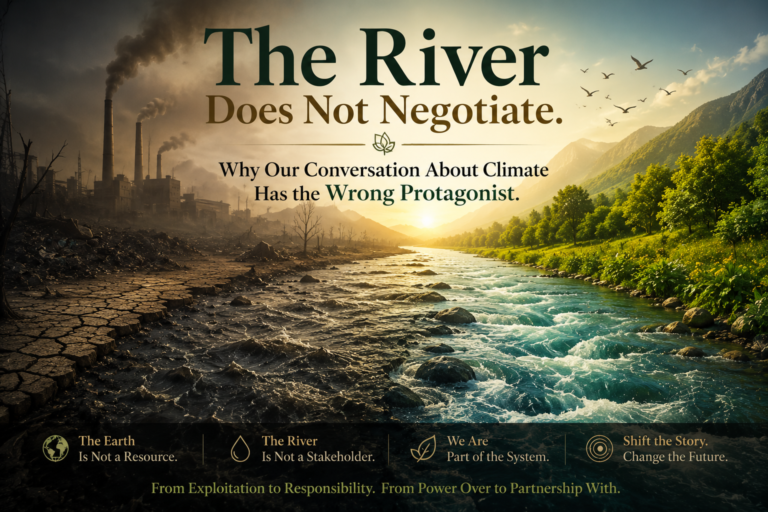
This is the understanding that Panchatatwa carries. This is what indigenous wisdom traditions worldwide have always known. And this is precisely the understanding that three centuries of industrial civilization have systematically dismantled — because you cannot extract unlimited resources from something you understand yourself to be.
The ecological crisis begins the moment a civilization forgets that it is part of a living system. The recovery of the earth begins the moment a human being remembers that they are part of that system. Not a manager of it. Not a steward of it. Part of it. Made of it. Sustained by it. Accountable to it.
The Art of Environmental Witness
The Shivaakriti Foundation — my ecological and cultural work — begins here. Not with solar panels (though we need them). Not with policy (though we need it). But with re-sensitization. With the cultivation of what I call Environmental Rasa: the capacity to feel the beauty and the suffering of the natural world as personal, as intimate, as one’s own.
When you can grieve a felled tree. When you can feel the joy of a morning sky as something that moves through your body, not just your camera. When your relationship to the earth is one of genuine reciprocity — that is when the behaviour changes. Not because you have been frightened into it, but because you have loved your way into it.
This is slow work. It is the most important work I know.