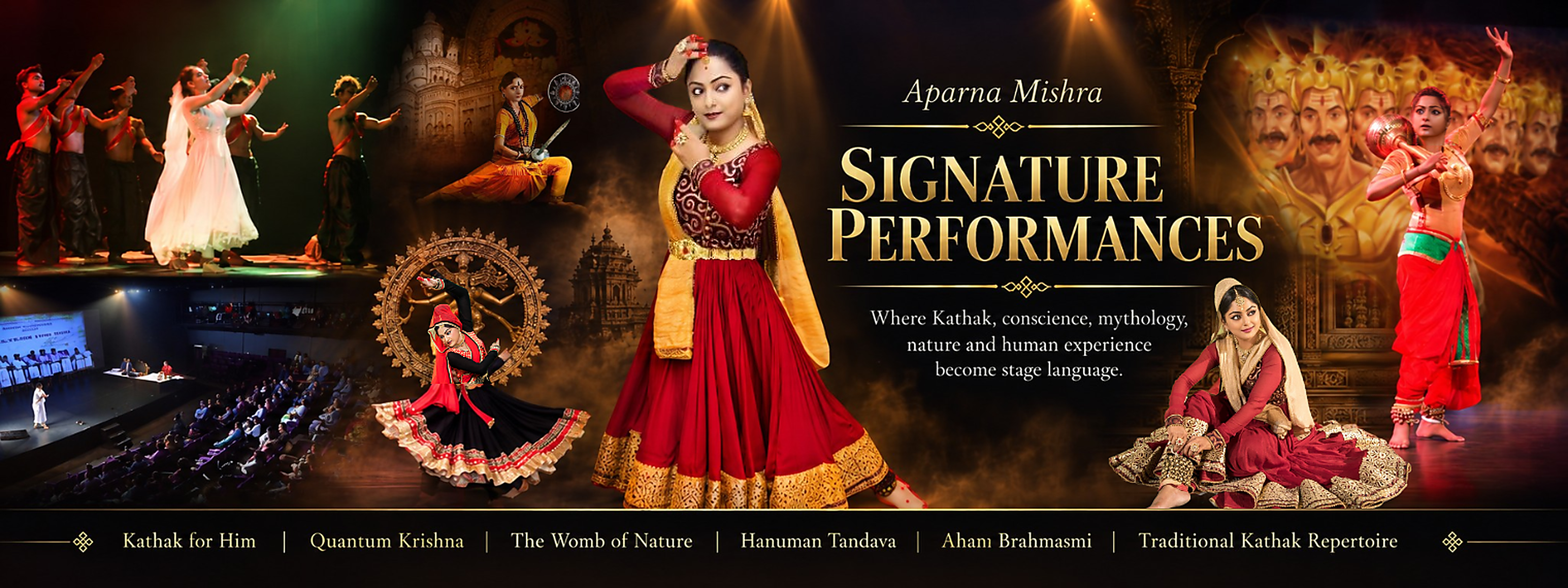
Performance meets purpose. Entertainment meets experience.
These are not recitals. They are not cultural interludes. They are full-scale cinematic stage productions — where classical Kathak meets quantum science, Vedic philosophy, ecological activism, spirituality, and the science of emotion, choreographed across three decades into experiences that move an audience from observation to immersion.
Each production carries a philosophical spine — mother nature and consciousness, gender and addiction, the sacred and the mathematical, emotional intelligence and quantum physics, the architecture of being human in all its dimensions — explored through the oldest classical language India has for both body and mind.
8 Countries · 30 Years of Practice · Multiple Awards
For Aparna, a performance is never entertainment alone. It is a philosophical act — an inquiry held on stage between the performer, the audience, and the larger question the production has been built to carry.
Every production draws from a single discipline — the Benaras Gharana tradition of Kathak — and brings it into conversation with ecology, quantum science, Vedic philosophy, gender, conscience, spirituality, and the invisible architecture of the human interior. The discipline is ancient. The questions it is asked to hold are urgently contemporary.
The result is a body of work that stands apart on the classical stage — cinematic in scale, philosophical in intent, deeply personal in execution, and uncompromising in its conviction that art can change the person watching it. Each production is conceived, choreographed, directed, and performed by Aparna herself. No delegation. No compromise. One woman, one discipline, and the question that called for it.
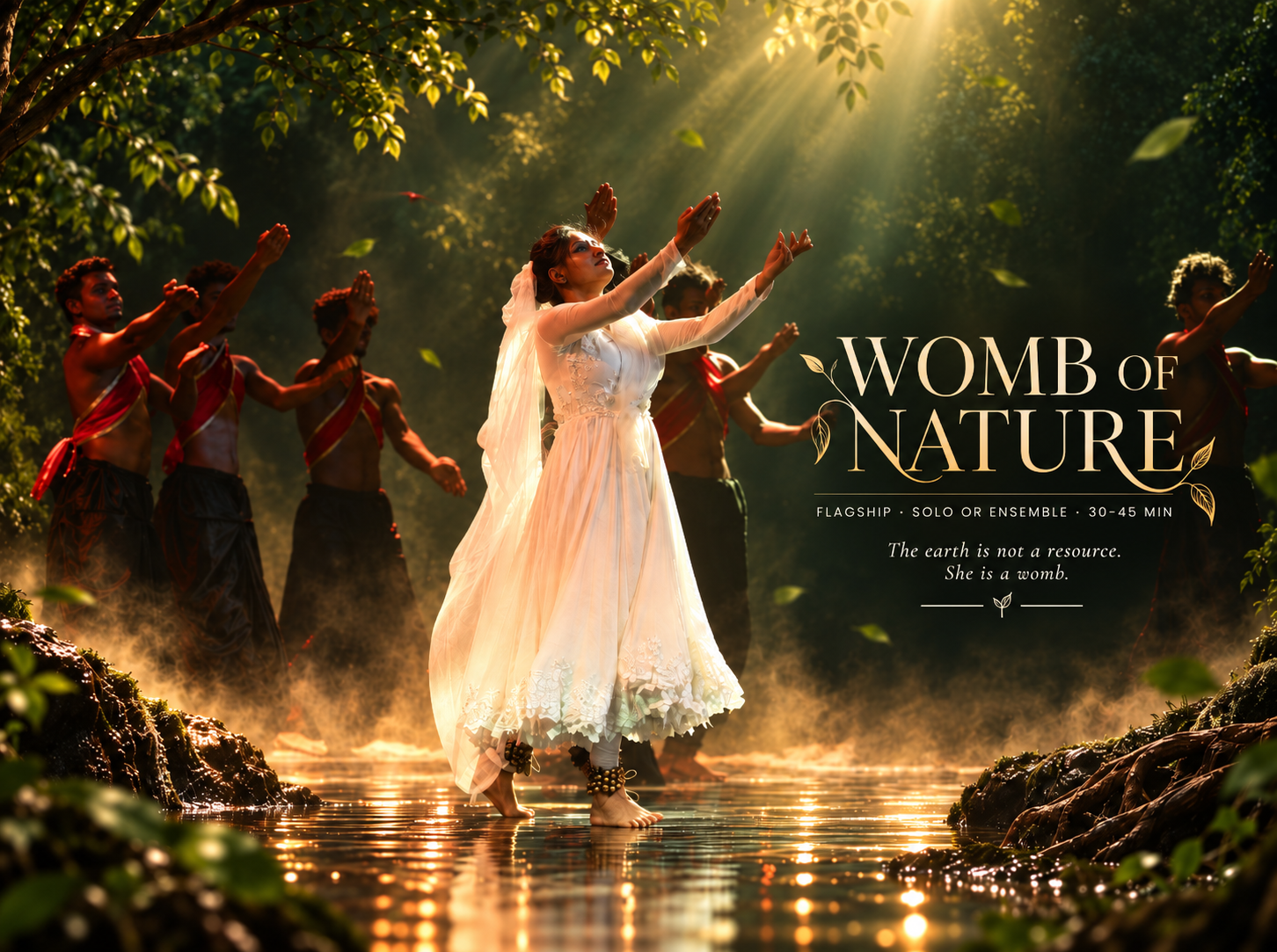
We are made of her elements. We have evolved in her womb. We do not need to save her — she is more than capable. All we need to do is behave, and maintain the balance.
She is the mother. The creator. The Shakti. But she is also Shiva — and what creates can destroy.
Womb of Nature is a powerful production on mother nature, the feminine force, and our intrinsic connection to the natural world. A choreographic exploration of climate, womanhood, and reverence — drawing on Kathak's grammar of expression to ask what we have forgotten, and what the body still remembers.
The earth is not a resource. She is a womb. This production remembers that.
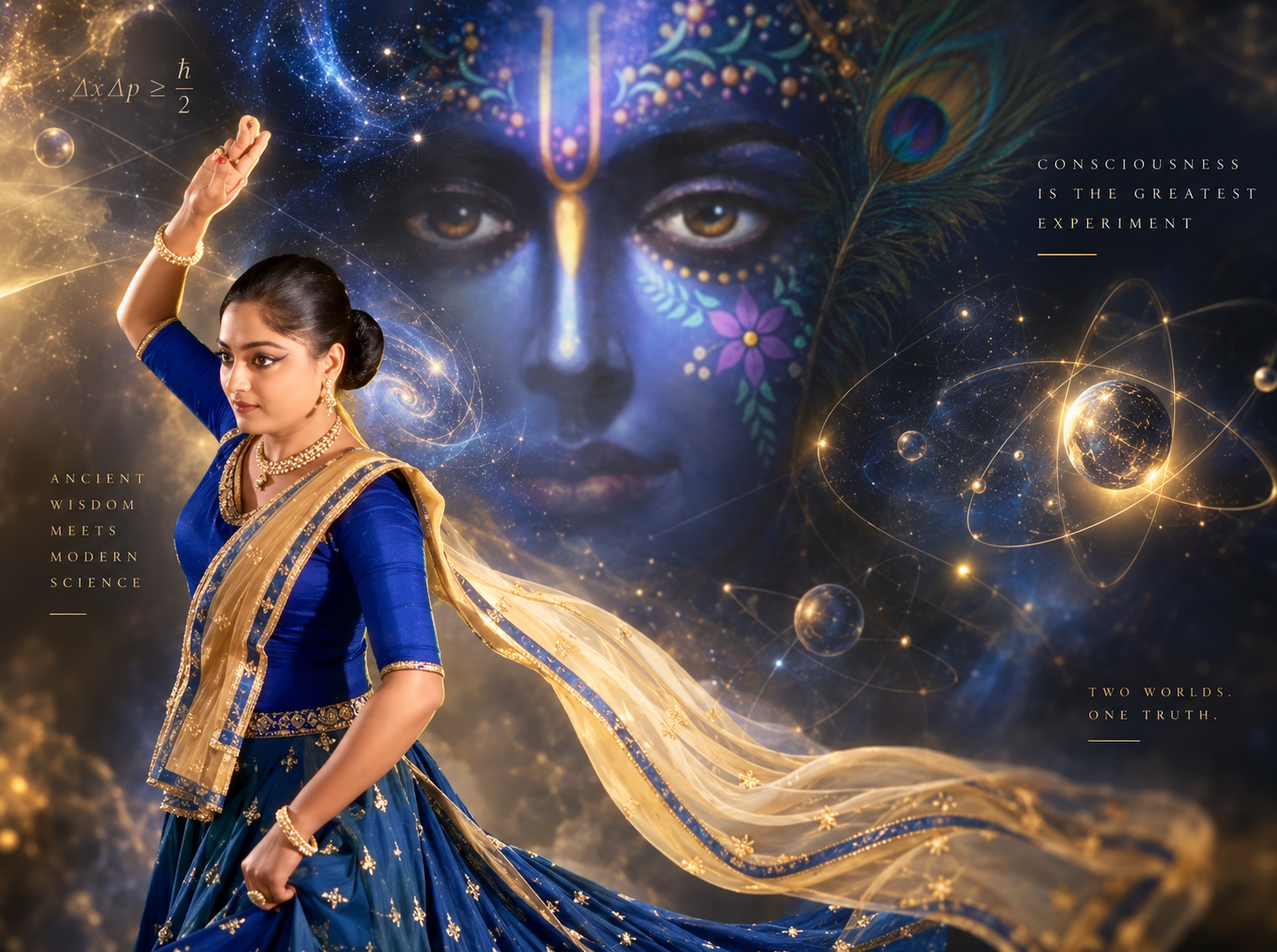
Where Vedic philosophy meets quantum physics — exploring consciousness, the creator, and the concept of God through the lens of Kathak, blended with quantum theory.
A signature work that asks whether the seers and the scientists were pointing toward the same truth. A mesmerising performance woven with movement, music, and cinematic aesthetics — the traditional grammar of Kathak held intact, yet bent through the lens of modern scientific quantum theory. A meditation on the nature of the observer and the observed. On whether the act of looking changes what is seen. On whether consciousness itself is the experiment.
Two knowledge systems, separated by millennia, arriving at the same silence.

"I am the infinite." A meditation on conscience, self, and the unified field of being.
The philosophical climax of the trilogy. A slower, deeper work — drawing on Vedanta, the Upanishads, and the language of the body to explore what it means to know oneself as part of the whole. The quietest of the three. The one that stays longest.
Paramparagat
A pure traditional Kathak performance — toda, tukra, tihai, parans, footwork, and abhinay on bhav including thumri, tandava, lasya, sringara. Curated to event requirement. For those who want the classical form in its undiluted power.
Theme-Based — Bespoke Productions
For occasions that ask for something singular — designed entirely around your event, your audience, and your intention. A bespoke production typically requires six to twelve weeks of design and rehearsal lead time.
A signature performance by Aparna Mishra is not a solo artist arriving with a USB drive. It is a fully produced stage experience, curated end to end:
Productions are available as solo or ensemble formats. Ensemble size, technical requirements, and logistics are tailored to the venue and the occasion.
Whether you are programming a national arts festival or a private evening for fifty — the engagement begins with a conversation about your stage, your audience, and the experience you want to create.
The evening closed with her again — this time in Bollywood Kathak, presenting lasya and navrasa with such feminine grace, beauty, and nuance that the audience could not reconcile the two performances as the same artist. The masculine power of the first half and the feminine beauty of the second belonged to two different people. They did not. They belonged to one.
In a programme featuring some of the finest performers in the country, including Padma Shri flautist Pandit Ronu Majumdar, it was Aparna Mishra who opened and closed the evening. The organisers knew. The audience confirmed it. That is the presence of a true artist — not range, not versatility, but the ability to become, completely and without remainder, whoever the stage asks her to be."
Then Aparna Mishra walked on, and the evening changed register entirely.
She arrived with a calm, spiritual presence that stilled the hall before the first beat. The kind of stillness that makes an audience lean forward without knowing why. What followed was A, Pavitra — a performance on Ganga, the holy river — but what she gave the audience was larger than the theme. It was about life, movement, clarity, the act of collecting and creating memories, and the grace to keep moving when the river asks you to. In a hall full of the global travel industry, she took their own subject and returned it as philosophy.
The audience control was absolute. The immersion was complete. In a programme of entertainers, she was the only one who made the audience forget they were at a gala — and remember what they were actually in the business of. Movement. Discovery. The courage to keep going. By the time she finished, the true spirit of the evening had been set. Not by the schedule. By her."